
by admin | Journaling & Reflection
In a world that constantly asks us to explain, justify, and keep up, journaling offers something rare: a place where nothing is required of us.
No performance.
No productivity.
No outcome.
Just presence.
Within the practice of soft living, journaling becomes less about insight and more about intimacy — a quiet conversation with yourself where honesty is welcome and urgency is not.

Letting Go of ‘Doing It Right’
Many people avoid journaling because they believe they’re doing it wrong. They worry about coherence, depth, or whether what they’re writing is meaningful enough. Soft living releases that pressure entirely.
There is no correct way to arrive on the page.
Some days, journaling will look like full sentences and clarity. Other days, it will be fragments, repetition, or silence. All of it belongs. The page is not there to evaluate you — it is there to hold you.
Soft journaling is not about fixing your thoughts. It is about witnessing them.
Writing Without an Agenda
In soft living, journaling is not a tool to optimize your life. It is a space to listen.
Instead of asking, “What should I be working on?”
You might ask, “What is asking to be heard?”
This subtle shift changes everything.
When we write without an agenda, we allow buried emotions to surface gently. We give ourselves permission to feel without rushing toward resolution. Often, clarity arrives on its own, not because we chased it, but because we made space for it.
A Practice of Emotional Safety
Journaling can become a powerful act of emotional safety, a place where you don’t have to be composed or agreeable. You can be confused. Tired. Angry. Tender. Uncertain.
The page does not flinch.
In this way, journaling teaches us how to stay with ourselves even when our emotions feel messy or contradictory. Over time, this practice builds trust. Not in the answers we find, but in our ability to sit with the questions.
Soft Living Journal Prompts
If you’d like a gentle place to begin, try writing from one of these prompts, slowly, without forcing depth:
-
Where am I pushing myself more than I need to?
-
What feels heavy today, and what might lighten it?
-
What does my body need right now?
-
Where could I choose softness instead of effort?
-
What would it look like to be kinder to myself today?
Let the writing wander. Let pauses exist. Let truth arrive at its own pace.
Making Journaling a Ritual, Not a Task
Soft journaling doesn’t require long sessions or perfect consistency. Five quiet minutes are enough when they are intentional.
You might pair journaling with:
The goal is not discipline, it is familiarity. Returning to the page as you would return to a safe place.
The Page as Home
Over time, journaling becomes more than a habit. It becomes a relationship — a place you return to when life feels loud or unclear.
You don’t journal to become better.
You journal to become closer.
Closer to your truth.
Closer to your needs.
Closer to the parts of you that don’t need fixing, only listening.
In the practice of soft living, the page is not a mirror for judgment.
It is a soft place to land.

by admin | Love & Relationships
Many of us learned to love the same way we learned to survive by adapting, accommodating, and holding ourselves together no matter the cost.
We learned to stay composed instead of expressive. To keep the peace instead of speaking our truth. To endure rather than feel. Over time, love became something we managed instead of something we rested into.
Soft living invites us to love differently,
- To step out of performance and into presence.
- To allow relationships to feel safe instead of strenuous.
- To choose connection that nourishes rather than consumes.
Soft Love Begins With Safety
At the heart of soft living is emotional safety — the felt sense that you can be yourself without bracing for impact. In relationships, this means you don’t have to shrink, harden, or stay alert in order to belong.
Soft love feels like:
-
being heard without having to justify your feelings
-
expressing needs without fear of punishment or withdrawal
-
existing without constant self-monitoring
-
trusting that tenderness will be met with care
This kind of safety doesn’t come from perfection. It comes from mutual respect, attunement, and the willingness to stay emotionally present even when conversations are uncomfortable.
Letting Go of Survival Patterns in Love
When we’ve lived in survival mode for a long time, those patterns often follow us into relationships. We over-give. We over-explain. We tolerate emotional distance while telling ourselves we’re being “understanding.”
Soft living asks us to notice when love feels effortful in ways that drain us.
Not all discomfort is a sign to leave but constant emotional tension is a sign to pause. Love should challenge us to grow, yes — but it should not require us to abandon ourselves.
Loving softly means recognizing when you’re trying to earn love through endurance instead of allowing it through authenticity.
Communication Without Armor
Soft living reshapes the way we communicate. Instead of approaching conversations defensively or rehearsing arguments in our heads, we speak from grounded honesty.
Soft communication sounds like:
-
“This is how I feel,” instead of “You always…”
-
“I need time,” instead of forcing resolution
-
“This matters to me,” without over-justifying
-
listening to understand, not to defend
It doesn’t mean conversations are easy. It means they are real and rooted in respect.
Choosing Presence Over Performance
In soft living, love is not measured by grand gestures or emotional intensity. It is measured by consistency, care, and the ability to stay emotionally available.
Presence looks like:
-
showing up without distraction
-
allowing silence without discomfort
-
offering reassurance without being asked
-
respecting boundaries without resentment
These are the moments that build trust. These are the moments where love feels like a place you can rest.
When Soft Living Reveals Hard Truths
Sometimes, embracing softness brings clarity we can no longer ignore.
When you stop numbing yourself, you may notice that certain relationships feel sharp, draining, or unsafe. Soft living doesn’t ask you to harden yourself to survive these dynamics, it asks you to listen to what your body already knows.
Gentleness is not about tolerating less-than-you-deserve behavior. It is about honoring your emotional needs with honesty and courage.
Choosing softness may mean choosing distance.
It may mean redefining love.
It may mean choosing yourself.
And that, too, is an act of love.
Love as a Place to Rest
At its most aligned, love does not demand constant proving. It does not require you to brace or perform. It allows you to arrive as you are — imperfect, feeling, human.
Soft living reminds us that love is not meant to be endured.
It is meant to be experienced with ease, care, and mutual presence.
When love feels safe, the heart softens.
When the heart softens, connection deepens.
And in that gentleness, love becomes not just something you give but something you can finally receive.

by admin | Lifestyle & Wellness
Strength has long been measured by how much we can endure.
How much we can carry without breaking. How well we can stay composed under pressure. How quickly we can recover and move on. Somewhere along the way, resilience became synonymous with silence, and survival was mistaken for success.
Soft living invites us to question that definition.
What if strength isn’t about pushing through at all costs but about knowing when not to?

The Quiet Misunderstanding of Softness
Softness is often misunderstood as fragility. As indecision. As a lack of discipline or drive. We associate gentleness with vulnerability, and vulnerability with risk. So we harden ourselves instead – our schedules, our boundaries, our emotions, believing that firmness is what keeps us safe.
But hardness is not the same as strength.
True strength does not require constant tension. It does not demand self-denial. It does not ask us to abandon our inner experience in order to appear capable.
Softness, in its truest form, is the ability to remain open without collapsing. It is presence without defensiveness. It is choosing to stay connected to yourself even when the world asks you to move faster than your nervous system can handle.
Strength That Begins Inside
Redefining strength means shifting from external performance to internal alignment.
It looks like:
-
acknowledging exhaustion instead of masking it
-
honoring emotions instead of minimizing them
-
choosing rest without explaining yourself
-
setting boundaries that protect your energy, not your image
This kind of strength is quiet. It doesn’t announce itself or seek validation. It shows up in the moments no one sees—when you pause before reacting, when you listen to your body, when you choose compassion over self-criticism.
Softness becomes strength when it is grounded in self-trust.
Why Soft Strength Feels Uncomfortable at First
For many of us, softness feels unfamiliar because it requires us to let go of control. If we’ve learned that being strong keeps us safe, then easing our grip can feel like exposure.
We may fear that if we stop pushing, everything will fall apart.
But what often happens instead is the opposite. When we stop forcing ourselves through life, clarity returns. Energy replenishes. Decisions feel less urgent and more intentional. The body relaxes, and with it, the mind.
Soft strength doesn’t remove responsibility, it removes unnecessary resistance.
Practicing Strength Without Hardness
Living softly doesn’t mean abandoning discipline or purpose. It means practicing them with respect for your limits.
You might notice soft strength when:
-
you take a break before burnout demands it
-
you allow emotions to pass without judgment
-
you speak honestly without over-explaining
-
you choose steadiness over urgency
These choices may seem small, but over time they reshape how you relate to yourself—and to the world.
A New Definition of Resilience
Resilience is not how quickly you bounce back.
It is how safely you stay with yourself during difficulty.
Soft living teaches us that we do not need to be hard to be capable. We do not need to suffer to be worthy. We do not need to prove our strength by ignoring our needs.
There is power in listening.
There is courage in slowing down.
There is strength in choosing gentleness again and again.
Softness is not weakness.
It is strength that has learned to breathe.

by admin | Feature, Lifestyle & Wellness
We live in a world that moves quickly and praises those who can keep up.
Faster replies. Fuller calendars. Sharper edges. We are taught sometimes subtly, sometimes loudly, that resilience looks like endurance, that strength sounds like certainty, and that slowing down is something we can do later, once everything is handled.
But later rarely comes.
Soft living begins with a quiet rebellion: the choice to stop rushing yourself through your own life.
It doesn’t announce itself with dramatic changes or bold declarations. Instead, it arrives gently in the moment you pause before saying yes, in the breath you take before reacting, in the permission you give yourself to rest without justifying it. Soft living is not about withdrawing from the world. It is about engaging with it differently.
Why Softness Feels Unfamiliar
For many of us, softness doesn’t feel natural at first, it feels unsafe. We’ve learned that being alert keeps us protected, that staying busy keeps us relevant, that being “on” keeps us needed. Over time, urgency becomes a habit, and tension becomes the baseline.
Soft living asks us to loosen that grip.
Not all at once. Not recklessly. But intentionally.
It asks us to notice how often we brace ourselves against life—how often we rush moments that don’t need rushing, override feelings that ask to be felt, or push past limits we promised ourselves we’d honor. Gentleness can feel like vulnerability, and vulnerability can feel risky when you’ve spent years being strong.
Yet softness is not the absence of strength.
It is strength that no longer needs to prove itself.
Soft Living Is Not Giving Up
There is a common misunderstanding that to live softly is to opt out to care less, to try less, to become passive. In truth, soft living requires discernment. It asks you to choose where your energy goes instead of scattering it everywhere. It invites you to be present instead of productive for the sake of appearance.
Soft living looks like:
-
listening to your body before it demands your attention
-
responding instead of reacting
-
allowing rest to be restorative, not strategic
-
choosing clarity over constant effort
It is not a collapse. It is a re-calibration.
The Body Knows the Way
One of the most powerful shifts that comes with soft living is the way the body begins to speak and be heard. When we slow down, we notice the subtle signals: the shallow breath, the tight jaw, the fatigue that isn’t physical but emotional.
Soft living is learning to respond to those signals with care instead of criticism.
Instead of asking, “Why can’t I keep going?”
we ask, “What do I need right now?”
This shift alone changes everything. The nervous system softens. The mind quiets. Decisions become clearer. Life feels less like something to survive and more like something to inhabit.
Gentleness as a Daily Practice
Soft living isn’t a one-time decision—it’s a daily practice.
It’s choosing one small kindness toward yourself each day.
It’s letting pauses exist without filling them.
It’s trusting that not everything needs to be solved immediately.
Some days, soft living will look like rest.
Other days, it will look like honesty.
And sometimes, it will look like courage, the courage to stop performing strength and simply be present.
A Different Measure of a Good Life
What if success wasn’t measured by how much you could carry, but by how well you could care for yourself while carrying it?
Soft living invites us to redefine a good life not by speed, output, or endurance but by sustainability. By emotional truth. By the ability to remain connected to ourselves even when life feels demanding.
This is not about escaping responsibility.
It’s about meeting responsibility with self-respect.
In choosing softness, you are not falling behind.
You are choosing to stay with yourself.
And in a world that constantly pulls us away from our own center, that choice may be the most powerful one of all.
Photo by Tatyana Rubleva on Unsplash
by admin | Tools & Recommendation, Uncategorized
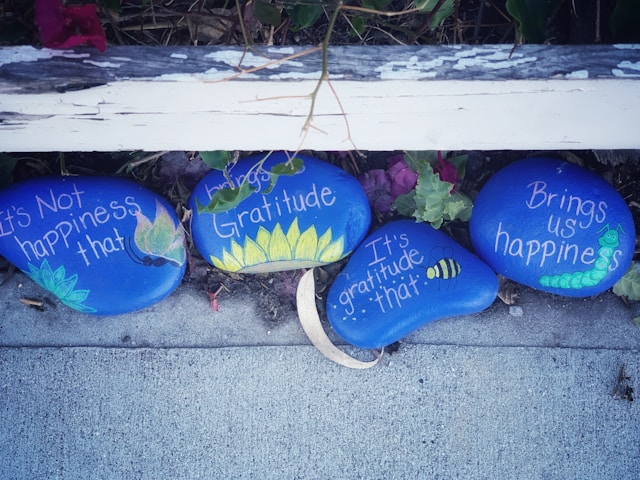
Here’s a cozy little list of gratitude tools from simple journals to full-blown apps that you can start using today to help you notice the little sparks of joy in your life. Think of them as gentle reminders: “Hey, there are good things happening.
Great Gratitude Tools You Can Try Online or on Your Phone
-
A graceful, well-designed app that combines a gratitude journal, daily affirmations, and even vision-board creation, this tool is ideal if you want to build a habit of noticing blessings + setting intentions.
-
Bonus: you can write your entries, add photos, or even record voice notes. Sweet for when you just want your heart to speak a little.
-
A simple but powerful gratitude journal app that nudges you to list positive moments each day. Great if you like a low-effort, consistent ritual.
-
It respects your privacy, supports bullet-journal style entries, and includes a daily “quote of the day” to inspire reflection.
-
Not strictly a “gratitude app,” but a beautiful, feature-rich journaling tool. Day One is great for mixing gratitude journaling with deeper reflections, photos, and multimedia making it a richer “memory + gratitude time capsule.”
-
Because it’s so flexible, you can use it however feels right: a daily gratitude check, a reflection on growth, or even just a snapshot of a fleeting but wonderful moment.
-
A lightweight but reliable online journal — think simple, safe, and always accessible. Penzu is great if you prefer writing on web or switching devices without losing your flow.
-
You can start for free with unlimited entries and basic reminders; if you want more customization and privacy features, there are Pro features.
-
Happyfeed is a gratitude diary that lets you capture good moments with photos or videos, adding more texture to your memories because sometimes a picture says “thank you, life” better than words.
-
Handy if you’re into visual journaling or want to build a gratitude log that feels alive and dynamic.
-
A web-based journal that offers structured “gratitude challenges” (e.g. 10- or 21-day) to help you build a habit, this is great for folks who find consistency tricky, but want to give themselves a gift of gratitude muscle. ggsc.berkeley.edu
-
You can choose to keep entries private or share them — a nice balance if you want to reflect quietly or occasionally share gratitude with others.
Why Gratitude Tools Work (and Why You Might Want to Use Them)
-
According to research on journaling and gratitude practice, writing down what you appreciate especially when you think deeply about why can lower stress, improve mood, and help you stay grounded when life gets hectic. PositivePsychology.com
-
Gratitude doesn’t need to be complicated. As simple as noting “three good things” like in Three Good Things can make a measurable difference in how you perceive your day. Oatmeal Apps
-
Over time these tools help you build an attitude of awareness, of kindness, small wins, love, even growth. And when you revisit old entries, you get this beautiful reminder of how far you’ve come (or how many wonders you tend to forget in the rush).
Photo by Donald Giannatti on Unsplash