
The Art of Soft Living: Choosing Gentleness in a World That Rushes

We live in a world that moves quickly and praises those who can keep up.
Faster replies. Fuller calendars. Sharper edges. We are taught sometimes subtly, sometimes loudly, that resilience looks like endurance, that strength sounds like certainty, and that slowing down is something we can do later, once everything is handled.
But later rarely comes.
Soft living begins with a quiet rebellion: the choice to stop rushing yourself through your own life.
It doesn’t announce itself with dramatic changes or bold declarations. Instead, it arrives gently in the moment you pause before saying yes, in the breath you take before reacting, in the permission you give yourself to rest without justifying it. Soft living is not about withdrawing from the world. It is about engaging with it differently.
Why Softness Feels Unfamiliar
For many of us, softness doesn’t feel natural at first, it feels unsafe. We’ve learned that being alert keeps us protected, that staying busy keeps us relevant, that being “on” keeps us needed. Over time, urgency becomes a habit, and tension becomes the baseline.
Soft living asks us to loosen that grip.
Not all at once. Not recklessly. But intentionally.
It asks us to notice how often we brace ourselves against life—how often we rush moments that don’t need rushing, override feelings that ask to be felt, or push past limits we promised ourselves we’d honor. Gentleness can feel like vulnerability, and vulnerability can feel risky when you’ve spent years being strong.
Yet softness is not the absence of strength.
It is strength that no longer needs to prove itself.
Soft Living Is Not Giving Up
There is a common misunderstanding that to live softly is to opt out to care less, to try less, to become passive. In truth, soft living requires discernment. It asks you to choose where your energy goes instead of scattering it everywhere. It invites you to be present instead of productive for the sake of appearance.
Soft living looks like:
-
listening to your body before it demands your attention
-
responding instead of reacting
-
allowing rest to be restorative, not strategic
-
choosing clarity over constant effort
It is not a collapse. It is a re-calibration.
The Body Knows the Way
One of the most powerful shifts that comes with soft living is the way the body begins to speak and be heard. When we slow down, we notice the subtle signals: the shallow breath, the tight jaw, the fatigue that isn’t physical but emotional.
Soft living is learning to respond to those signals with care instead of criticism.
Instead of asking, “Why can’t I keep going?”
we ask, “What do I need right now?”
This shift alone changes everything. The nervous system softens. The mind quiets. Decisions become clearer. Life feels less like something to survive and more like something to inhabit.
Gentleness as a Daily Practice
Soft living isn’t a one-time decision—it’s a daily practice.
It’s choosing one small kindness toward yourself each day.
It’s letting pauses exist without filling them.
It’s trusting that not everything needs to be solved immediately.
Some days, soft living will look like rest.
Other days, it will look like honesty.
And sometimes, it will look like courage, the courage to stop performing strength and simply be present.
A Different Measure of a Good Life
What if success wasn’t measured by how much you could carry, but by how well you could care for yourself while carrying it?
Soft living invites us to redefine a good life not by speed, output, or endurance but by sustainability. By emotional truth. By the ability to remain connected to ourselves even when life feels demanding.
This is not about escaping responsibility.
It’s about meeting responsibility with self-respect.
In choosing softness, you are not falling behind.
You are choosing to stay with yourself.
And in a world that constantly pulls us away from our own center, that choice may be the most powerful one of all.
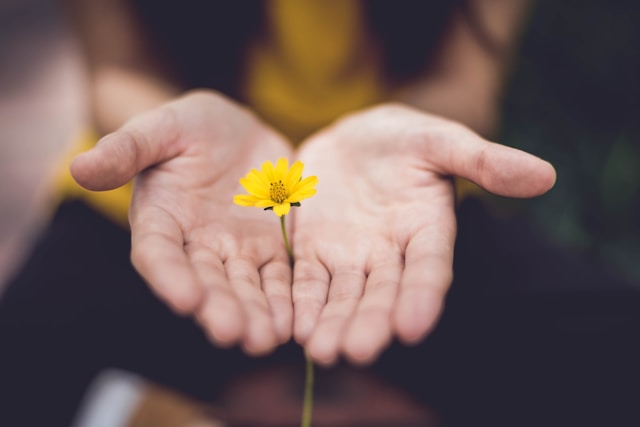
Photo by Tatyana Rubleva on Unsplash