
Editor’s Pick: Gratitude Tools You Can Use to Light Up Your Days (because good vibes deserve good tools)

Editor’s Pick: Gratitude Tools You Can Use to Light Up Your Days (because good vibes deserve good tools)

Here’s a cozy little list of gratitude tools from simple journals to full-blown apps that you can start using today to help you notice the little sparks of joy in your life. Think of them as gentle reminders: “Hey, there are good things happening.

Great Gratitude Tools You Can Try Online or on Your Phone


Gratitude – Self‑Care Journal

  • A graceful, well-designed app that combines a gratitude journal, daily affirmations, and even vision-board creation, this tool is ideal if you want to build a habit of noticing blessings + setting intentions.

  • Bonus: you can write your entries, add photos, or even record voice notes. Sweet for when you just want your heart to speak a little.


Three Good Things

  • A simple but powerful gratitude journal app that nudges you to list positive moments each day. Great if you like a low-effort, consistent ritual.

  • It respects your privacy, supports bullet-journal style entries, and includes a daily “quote of the day” to inspire reflection.


Day One

  • Not strictly a “gratitude app,” but a beautiful, feature-rich journaling tool. Day One is great for mixing gratitude journaling with deeper reflections, photos, and multimedia making it a richer “memory + gratitude time capsule.”

  • Because it’s so flexible, you can use it however feels right: a daily gratitude check, a reflection on growth, or even just a snapshot of a fleeting but wonderful moment.


Penzu

  • A lightweight but reliable online journal — think simple, safe, and always accessible. Penzu is great if you prefer writing on web or switching devices without losing your flow.

  • You can start for free with unlimited entries and basic reminders; if you want more customization and privacy features, there are Pro features.


Happyfeed

  • Happyfeed is a gratitude diary that lets you capture good moments with photos or videos, adding more texture to your memories because sometimes a picture says “thank you, life” better than words.

  • Handy if you’re into visual journaling or want to build a gratitude log that feels alive and dynamic.


Thnx4 Gratitude Journal

  • A web-based journal that offers structured “gratitude challenges” (e.g. 10- or 21-day) to help you build a habit, this is great for folks who find consistency tricky, but want to give themselves a gift of gratitude muscle. ggsc.berkeley.edu

  • You can choose to keep entries private or share them — a nice balance if you want to reflect quietly or occasionally share gratitude with others.


Why Gratitude Tools Work (and Why You Might Want to Use Them)

  • According to research on journaling and gratitude practice, writing down what you appreciate especially when you think deeply about why can lower stress, improve mood, and help you stay grounded when life gets hectic. PositivePsychology.com

  • Gratitude doesn’t need to be complicated. As simple as noting “three good things” like in Three Good Things can make a measurable difference in how you perceive your day. Oatmeal Apps

  • Over time these tools help you build an attitude of awareness, of kindness, small wins, love, even growth. And when you revisit old entries, you get this beautiful reminder of how far you’ve come (or how many wonders you tend to forget in the rush).


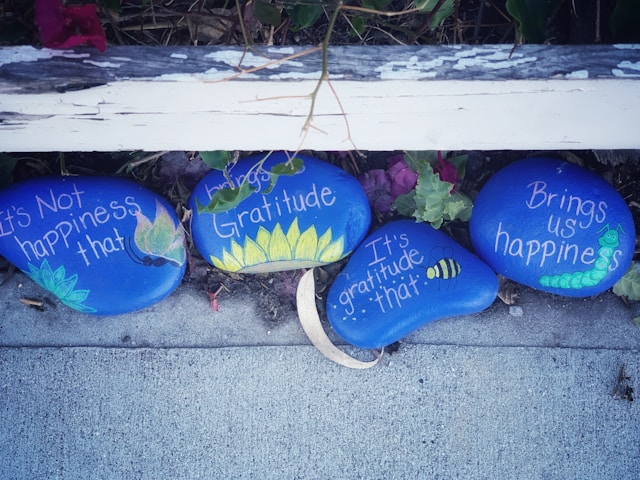
Photo by Donald Giannatti on Unsplash

The “Coming Home” Journaling Framework : A Ritual of Returning to Yourself

The “Coming Home” Journaling Framework : A Ritual of Returning to Yourself

There are moments in life when you feel strangely distant from your own center, like you’ve been living on autopilot, ticking boxes, showing up for everyone else, and somewhere along the way, the quiet truth of who you are got buried under expectation and exhaustion.

Then suddenly, in the stillness of an afternoon or the hum of a late-night thought, you notice the ache:
“I miss myself.”

If that’s where you are, this framework is your return.

“Coming Home” is not a practice of reinventing yourself. It’s a practice of remembering yourself with tenderness, honesty, and the courage to sit with your own truth, even when it is uncomfortable.

This journaling framework was created to be a doorway: a process that gently gathers the scattered parts of you, and guides them back into one room, one body, one breath — your own.

Why Journaling Can Bring You Home

Writing has a way of bypassing the masks we wear in daily life. It moves under the surface past the performance, the survival patterns, the protective armor and touches the real.

Pens don’t judge. Blank pages don’t demand. You can arrive exactly as you are.

Journaling becomes a homecoming because it allows you to listen inward with presence instead of pressure. It invites you to lay down the stories that hurt, and pick up the ones that heal.

The Framework: Coming Home in Five Movements

The Coming Home Framework is designed as a cycle, a gentle rhythm that mirrors the way we naturally evolve. Each step brings you deeper into clarity, self-compassion, and grounded truth.

You can do all five in one sitting, or take one step per day.
What matters is the return, not the pace.

1. ARRIVE

“Where am I now?”

Most of us rush into journaling the way we rush through everything else. This step slows the mind down so the heart can speak.

Take a breath.
Land in your body.
Notice the tension hidden in your shoulders, the stories looping in your mind.

Then write:

  • What am I feeling in this moment?

  • What thoughts are taking up the most space?

  • Where in my body do I feel that emotion?

  • If my mood had a color or texture, what would it be?

This is about honesty, not perfection. Arriving is the practice of facing yourself kindly.

2. UNPACK

“What is the truth beneath the noise?”

This is where you gently untangle the knots.

Write freely. Let thoughts spill without editing. Follow the thread even if it’s messy, even if it surprises you.

Questions you might explore:

  • What is really bothering me under the surface?

  • What am I avoiding admitting to myself?

  • What feels heavy lately and why?

  • Who or what am I trying to protect?

Unpacking is the moment you realize that what you thought was “dramatic” or “silly” is actually valid, because it matters to you.

3. DISCOVER

“What truth is trying to reach me?”

After the release comes the revelation.
This part often arrives quietly like a whisper rather than a shout.

Reflect on your writing and look for patterns:

  • What repeat themes do I see?

  • What fear keeps showing up?

  • What desire is trying to emerge?

  • What truth feels obvious now that it’s written?

Every discovery is a door.
Sometimes it’s a boundary you need.
Sometimes it’s a dream you’ve outgrown.
Sometimes it’s a voice saying, “You deserve more.”

4. RESTORE

“How can I be gentle with myself here?”

Healing is not found in force, it’s found in softness.
This step is about nurturing the part of you that’s been carrying the weight.

You might write:

  • What do I need most right now?

  • What support would make me feel safer in this truth?

  • How can I show compassion to myself today?

  • What can I release to reclaim my peace?

This is where you practice emotional self-care not as a trend, but as a form of self-respect.

When you restore, you tell yourself: “I hear you. I’m here.”

5. RETURN

“What am I choosing going forward?”

Coming home isn’t just reflection, it’s integration.
This is where you take your new clarity and turn it into life.

Choose one grounded shift, small, doable, loving.

Examples:

  • I will say no when my body feels tired.

  • I will ask for help without apologizing.

  • I will create morning silence for myself.

  • I will let myself rest without guilt.

Your return is the moment you step back into your life as a little more of yourself.

How to Build a Coming Home Ritual

Instead of journaling only when life collapses, let this become a rhythm — a place you come to before the overwhelm.

Here’s a simplicity-first ritual:

Set your space
A cup of tea, quiet lighting, a pillow behind your back.

Set your time
10 minutes is enough if you are present.

Set your intention
“Today, I return to myself.”

Write
Follow the five movements with trust.

Pause
Let silence print the message deeper into you.

This isn’t productivity. It’s inner presence.

When the Practice Feels Hard

Some days you’ll write with fire.
Other days you’ll stare at the page.

Both are homecomings.

Because the point is not eloquence, it’s honesty.

If tears come, let them.
If resistance comes, welcome it.
Every emotional response is a clue: you’re getting closer.

Your Return

Coming home is not a destination. It’s a relationship — with the self you’ve always been underneath the survival strategies, the expectations, and the stories you inherited before you had a voice.

This framework helps you:

  • see yourself clearly

  • honor what hurts

  • reclaim what matters

  • and soften into your own life

Not by becoming someone new, but by remembering the woman, the human, the soul you’ve always been.

You don’t find home.
You return to it.

One breath at a time.
One page at a time.
One truth at a time.

Welcome back.

Photo by Ashlyn Ciara on Unsplash