by admin | Tools & Recommendation, Uncategorized
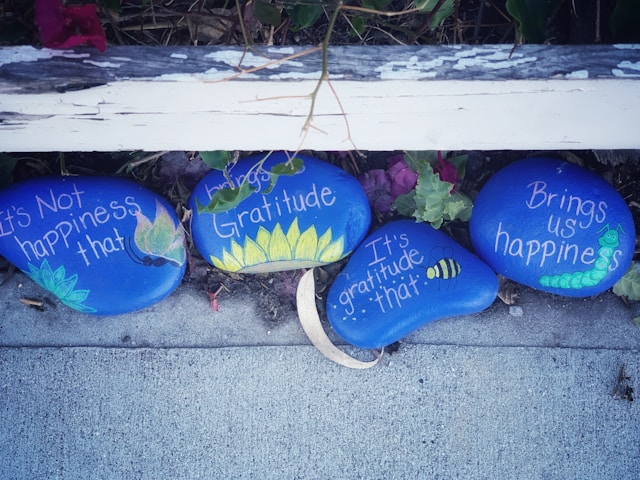
Here’s a cozy little list of gratitude tools from simple journals to full-blown apps that you can start using today to help you notice the little sparks of joy in your life. Think of them as gentle reminders: “Hey, there are good things happening.
Great Gratitude Tools You Can Try Online or on Your Phone
-
A graceful, well-designed app that combines a gratitude journal, daily affirmations, and even vision-board creation, this tool is ideal if you want to build a habit of noticing blessings + setting intentions.
-
Bonus: you can write your entries, add photos, or even record voice notes. Sweet for when you just want your heart to speak a little.
-
A simple but powerful gratitude journal app that nudges you to list positive moments each day. Great if you like a low-effort, consistent ritual.
-
It respects your privacy, supports bullet-journal style entries, and includes a daily “quote of the day” to inspire reflection.
-
Not strictly a “gratitude app,” but a beautiful, feature-rich journaling tool. Day One is great for mixing gratitude journaling with deeper reflections, photos, and multimedia making it a richer “memory + gratitude time capsule.”
-
Because it’s so flexible, you can use it however feels right: a daily gratitude check, a reflection on growth, or even just a snapshot of a fleeting but wonderful moment.
-
A lightweight but reliable online journal — think simple, safe, and always accessible. Penzu is great if you prefer writing on web or switching devices without losing your flow.
-
You can start for free with unlimited entries and basic reminders; if you want more customization and privacy features, there are Pro features.
-
Happyfeed is a gratitude diary that lets you capture good moments with photos or videos, adding more texture to your memories because sometimes a picture says “thank you, life” better than words.
-
Handy if you’re into visual journaling or want to build a gratitude log that feels alive and dynamic.
-
A web-based journal that offers structured “gratitude challenges” (e.g. 10- or 21-day) to help you build a habit, this is great for folks who find consistency tricky, but want to give themselves a gift of gratitude muscle. ggsc.berkeley.edu
-
You can choose to keep entries private or share them — a nice balance if you want to reflect quietly or occasionally share gratitude with others.
Why Gratitude Tools Work (and Why You Might Want to Use Them)
-
According to research on journaling and gratitude practice, writing down what you appreciate especially when you think deeply about why can lower stress, improve mood, and help you stay grounded when life gets hectic. PositivePsychology.com
-
Gratitude doesn’t need to be complicated. As simple as noting “three good things” like in Three Good Things can make a measurable difference in how you perceive your day. Oatmeal Apps
-
Over time these tools help you build an attitude of awareness, of kindness, small wins, love, even growth. And when you revisit old entries, you get this beautiful reminder of how far you’ve come (or how many wonders you tend to forget in the rush).
Photo by Donald Giannatti on Unsplash

by admin | Journaling & Reflection, Tools & Recommendation, Uncategorized
There are moments in life when you feel strangely distant from your own center, like you’ve been living on autopilot, ticking boxes, showing up for everyone else, and somewhere along the way, the quiet truth of who you are got buried under expectation and exhaustion.
Then suddenly, in the stillness of an afternoon or the hum of a late-night thought, you notice the ache:
“I miss myself.”
If that’s where you are, this framework is your return.
“Coming Home” is not a practice of reinventing yourself. It’s a practice of remembering yourself with tenderness, honesty, and the courage to sit with your own truth, even when it is uncomfortable.
This journaling framework was created to be a doorway: a process that gently gathers the scattered parts of you, and guides them back into one room, one body, one breath — your own.
Why Journaling Can Bring You Home
Writing has a way of bypassing the masks we wear in daily life. It moves under the surface past the performance, the survival patterns, the protective armor and touches the real.
Pens don’t judge. Blank pages don’t demand. You can arrive exactly as you are.
Journaling becomes a homecoming because it allows you to listen inward with presence instead of pressure. It invites you to lay down the stories that hurt, and pick up the ones that heal.
The Framework: Coming Home in Five Movements
The Coming Home Framework is designed as a cycle, a gentle rhythm that mirrors the way we naturally evolve. Each step brings you deeper into clarity, self-compassion, and grounded truth.
You can do all five in one sitting, or take one step per day.
What matters is the return, not the pace.
1. ARRIVE
“Where am I now?”
Most of us rush into journaling the way we rush through everything else. This step slows the mind down so the heart can speak.
Take a breath.
Land in your body.
Notice the tension hidden in your shoulders, the stories looping in your mind.
Then write:
-
What am I feeling in this moment?
-
What thoughts are taking up the most space?
-
Where in my body do I feel that emotion?
-
If my mood had a color or texture, what would it be?
This is about honesty, not perfection. Arriving is the practice of facing yourself kindly.
2. UNPACK
“What is the truth beneath the noise?”
This is where you gently untangle the knots.
Write freely. Let thoughts spill without editing. Follow the thread even if it’s messy, even if it surprises you.
Questions you might explore:
-
What is really bothering me under the surface?
-
What am I avoiding admitting to myself?
-
What feels heavy lately and why?
-
Who or what am I trying to protect?
Unpacking is the moment you realize that what you thought was “dramatic” or “silly” is actually valid, because it matters to you.
3. DISCOVER
“What truth is trying to reach me?”
After the release comes the revelation.
This part often arrives quietly like a whisper rather than a shout.
Reflect on your writing and look for patterns:
-
What repeat themes do I see?
-
What fear keeps showing up?
-
What desire is trying to emerge?
-
What truth feels obvious now that it’s written?
Every discovery is a door.
Sometimes it’s a boundary you need.
Sometimes it’s a dream you’ve outgrown.
Sometimes it’s a voice saying, “You deserve more.”
4. RESTORE
“How can I be gentle with myself here?”
Healing is not found in force, it’s found in softness.
This step is about nurturing the part of you that’s been carrying the weight.
You might write:
-
What do I need most right now?
-
What support would make me feel safer in this truth?
-
How can I show compassion to myself today?
-
What can I release to reclaim my peace?
This is where you practice emotional self-care not as a trend, but as a form of self-respect.
When you restore, you tell yourself: “I hear you. I’m here.”
5. RETURN
“What am I choosing going forward?”
Coming home isn’t just reflection, it’s integration.
This is where you take your new clarity and turn it into life.
Choose one grounded shift, small, doable, loving.
Examples:
-
I will say no when my body feels tired.
-
I will ask for help without apologizing.
-
I will create morning silence for myself.
-
I will let myself rest without guilt.
Your return is the moment you step back into your life as a little more of yourself.
How to Build a Coming Home Ritual
Instead of journaling only when life collapses, let this become a rhythm — a place you come to before the overwhelm.
Here’s a simplicity-first ritual:
Set your space
A cup of tea, quiet lighting, a pillow behind your back.
Set your time
10 minutes is enough if you are present.
Set your intention
“Today, I return to myself.”
Write
Follow the five movements with trust.
Pause
Let silence print the message deeper into you.
This isn’t productivity. It’s inner presence.
When the Practice Feels Hard
Some days you’ll write with fire.
Other days you’ll stare at the page.
Both are homecomings.
Because the point is not eloquence, it’s honesty.
If tears come, let them.
If resistance comes, welcome it.
Every emotional response is a clue: you’re getting closer.
Your Return
Coming home is not a destination. It’s a relationship — with the self you’ve always been underneath the survival strategies, the expectations, and the stories you inherited before you had a voice.
This framework helps you:
Not by becoming someone new, but by remembering the woman, the human, the soul you’ve always been.
You don’t find home.
You return to it.
One breath at a time.
One page at a time.
One truth at a time.
Welcome back.
Photo by Ashlyn Ciara on Unsplash
by admin | Lifestyle & Wellness, Uncategorized
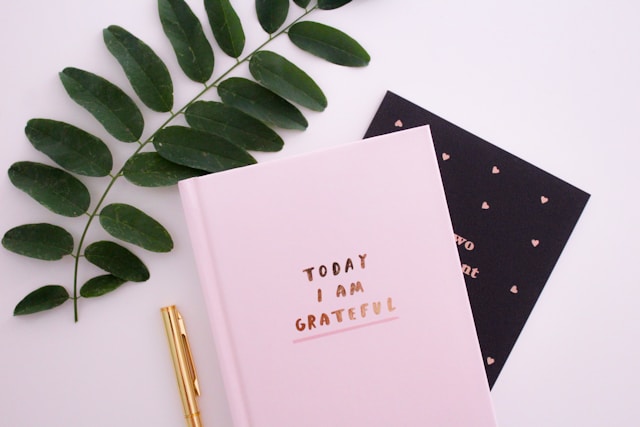
There is a quiet moment that happens around a dinner table, a pause between passing the rice and wiping little faces, where the whole room seems to breathe.
That’s when Harvard researcher Tyler VanderWeele, co-director of the Initiative on Health, Spirituality, and Religion at the Harvard T.H. Chan School of Public Health and his family, name one thing they’re grateful for. It doesn’t have to be profound, sometimes it’s a restful night’s sleep, sometimes it’s sunshine after rain. And yet, this simple habit shapes something deeper: connection, presence, and the feeling that life, even on the rough days, still offers something to hold onto.
Gratitude doesn’t erase the hard moments — it creates space for life to feel bigger than them.
How Gratitude Shapes the Way We Feel — and Live
Over the years, researchers have been drawn to gratitude because of its subtle but powerful effect on well-being. Scientific studies have linked gratitude to:
But recent research from the long-running Nurses’ Health Study adds a new dimension to the story, gratitude may be linked to longer life.
This is the first time gratitude is being studied not just as a feeling, but as a potential contributor to longevity.
The Study: Gratitude and a Longer Life
In 2016, more than 49,000 women, all participants in the Nurses’ Health Study, with an average age of 79, answered a six-item questionnaire about gratitude.
The questions were simple statements like:
“I have so much in life to be thankful for.”
Researchers then followed their medical records for the next four years. In that time, 4,608 participants passed away, largely from cardiovascular disease — the leading cause of death globally.
The Findings
Those who scored in the highest range of gratitude had a 9% lower risk of death during the study period than those with the lowest gratitude scores even after accounting for age, health, income, and mental well-being.
Nine percent may sound modest, but consider what it represents:
No medication.
No equipment.
No annual subscription.
Just consistent appreciation for life.
Anyone, at any season of life, can practice gratitude.
Why Might Gratitude Make a Difference?
Researchers can’t yet say precisely how gratitude influences longevity, but there are meaningful theories:
-
It increases daily happiness, which can affect health outcomes
-
It encourages better self-care, like seeing a doctor or eating well
-
It strengthens relationships and social support, which we know protect mental and physical health
In a world always pressing forward, gratitude pulls us back into what’s here now — and what’s still worth caring for.
The Limitations
It’s important to acknowledge what this research doesn’t say:
-
It’s observational — meaning it shows association, not direct cause
-
Participants were mostly white, older women in health professions
So more research is needed to understand how gratitude affects men, younger people, and more diverse communities.
Still, the strength of the study lies in its large sample size, and the extensive health data available. It suggests something real is happening even if we don’t yet fully understand it.
A Daily Ritual to Invite Gratitude
If you don’t feel particularly grateful today — that’s okay. Gratitude isn’t a mood; it’s a practice.
And like all practices, it can be nurtured.
Here are six gentle questions that can open the door:
-
What happened today that made me smile, even a little?
-
What am I surrounded by that I’ve gotten used to, but would miss if it disappeared?
-
Who in my life consistently shows up for me in big or small ways?
-
What story, show, or moment recently made me feel inspired?
-
What am I looking forward to this week and why does it matter to me?
-
What is the kindest thing someone has done for me lately?
Let them be felt, not just answered.
Practices for a Gratitude-Centered Life
Here are small ways to let gratitude breathe into your day:
The Dinner Ritual
Like VanderWeele’s family, begin or end meals with one sentence of gratitude.
The Thank-You Letter
Write a letter to someone who shaped you even if you never send it.
The Savoring Pause
Stop in the middle of your day, look around, take in the texture of the moment, and let yourself notice what is good.
Gratitude is simply noticing and honoring the life happening in front of you.
One Small Practice, A Bigger Life
A 9% reduction in mortality won’t make headlines like a breakthrough drug. But when something so simple, so gentle, and so accessible has a measurable impact, it reminds us of something profound:
Life doesn’t just grow in the grand gestures.
It expands in the quiet acknowledgements of what we already have.
Gratitude is the whisper that says:
This moment matters. This breath matters. This life as it is, is worth loving.
And always remember that: Gratitude is a lifestyle.
Photo by Gabrielle Henderson on Unsplash

by admin | Love & Relationships, Uncategorized
Many people used to think love was a spark, bright, intoxicating, the kind of feeling that makes you lose your appetite and all common sense. It was the butterfly chaos, the poetic heartbreak, the long nights of overthinking, and the early mornings of waiting for messages that never came. If intensity was the measure, then we had surely known love.
But then people learned there is a version of love that doesn’t require suffering to feel real. It doesn’t demand that you bleed to be seen. And no matter how many epic love stories we’ve watched on our screens, modern love is quietly being redefined, not by grand gestures, but by something far more powerful:
Emotional compatibility.
This isn’t just another relationship buzzword. It’s the new foundation people are choosing, especially those who have loved hard, healed harder, and finally realized they deserve peace more than drama.
The Shift: From Chemistry to Connection
“Do we have chemistry?” used to be the million-peso question. Now it’s becoming:
“Can we emotionally understand each other?”
Chemistry makes your heart race. Compatibility lets it rest.
We’re waking up to the truth that romance built on intensity alone is a firework, beautiful but brief. Emotional compatibility is more like a warm sunrise… steady, honest, and something you can wake up to every day without fear it will disappear.
Here’s why it matters now more than ever:
-
People are exhausted. We’ve outgrown relationships that feel like emotional survival games.
-
Healing has changed our standards. Once you’ve faced your shadows, you stop entertaining the ones who can’t meet you with the same maturity.
-
Emotional intelligence is attractive. Empathy is the new luxury.
Modern love is less about the thrill of unpredictability and more about the safety of presence.
So What Is Emotional Compatibility?
It’s two emotional worlds choosing to meet without trying to dominate each other. It’s not sameness, it’s synergy.
You’re emotionally compatible with someone when:
-
Your nervous systems don’t go into battle mode with each other.
-
You can disagree without turning into enemies.
-
You both know how to apologize (and actually mean it).
-
Your love isn’t threatened by the other’s individuality.
-
You celebrate growth instead of fearing it.
Some call it “healthy love.” Others call it “boring.” Personally? I think it’s revolutionary.
Because in a world where chaos has become a love language, peace can feel unfamiliar but that doesn’t make it wrong.
The New Love Language: Safety
The most powerful line in 2025 might be this one:
I feel safe with you.
When safety becomes the priority, the relationship can actually deepen. Why? Because safety is what allows authenticity. You can’t bloom when you’re bracing for impact.
In emotionally compatible relationships:
-
Vulnerability isn’t used as ammunition.
-
Feelings are respected, not dismissed.
-
Needs are spoken, not punished.
-
Boundaries are loved, not feared.
Imagine two hearts meeting without the instinct to defend. That’s emotional compatibility in its purest form.
Why Modern Love Can’t Thrive Without It
Let’s be honest. Our generation has a complicated love history. Many of us learned patterns from parents who never healed their own wounds. We entered relationships thinking we needed to rescue someone, or be rescued, to feel worthy of love.
Now? We’re learning we don’t need to bleed to prove we care. We don’t need to shrink to keep the peace. We don’t need to abandon ourselves to be chosen.
Emotional compatibility is the upgrade that filters out:
-
relationships built on dependency disguised as passion,
-
partners who want connection but avoid accountability,
-
dynamics where love is conditional on self-betrayal.
It’s the shift from “Choose me” to “Let’s choose each other.”
How to Recognize It
If you’ve ever healed from a toxic dynamic, emotional compatibility will feel like entering a different universe. The relationship won’t require you to:
It will feel like this:
-
You can breathe.
-
You don’t have to play roles.
-
Love isn’t a strategy.
-
The future feels collaborative, not chaotic.
-
You don’t lose yourself—you find more of yourself.
Compatibility isn’t the absence of conflict. It’s the ability to meet conflict and grow from it.
The Courage It Takes to Choose Emotional Compatibility
Not everyone is ready for emotionally compatible love.
It requires maturity.
It requires knowing yourself.
It requires a kind of vulnerability that isn’t dramatic, but intentional.
Most of all, it requires unlearning:
-
the belief that love must feel like a rollercoaster,
-
the pattern of confusing intensity with intimacy,
-
the fear that stability means settling.
Choosing emotional compatibility is choosing to grow up emotionally. It’s not the fantasy—it’s the foundation.
And yes, it takes courage to leave behind the familiar chaos for an unfamiliar peace. Chaos has rhythms, after all… but so does healing.
What Modern Love Really Wants
We want a partner who can sit in the dark with us without turning on the light too quickly. Someone who can listen without fixing. Someone who offers presence instead of pressure.
Modern love is asking:
-
Can you hold space for my emotions?
-
Can you regulate your own triggers?
-
Can we meet halfway without losing ourselves?
-
Can we build without breaking each other?
When the answer is yes, love turns into something powerful and sustainable not a performance, but a partnership.
A Love Worthy of Who You’re Becoming
Here’s the real gift of emotional compatibility:
It mirrors your evolution.
When you’ve done the inner work, your relationships become reflections of your growth, not your wounds. You stop bonding over trauma and start bonding over values.
Your energy shifts from survival to expansion.
Your conversations shift from drama to depth.
Your heart shifts from fear to faith.
And suddenly, love becomes gentle not because it’s weak, but because it no longer needs to win.
Final Reflection
Maybe the real revolution in love isn’t louder passion or grand intensity, it’s the quiet, steady alignment of two people who’ve done their inner work and choose each other from a place of wholeness.
In a world full of almost-loves and half-healed romances, emotional compatibility is the difference between holding hands and holding on for dear life.
Modern love doesn’t have to hurt to feel powerful. It just has to be honest.
And as someone who has danced with chaos and finally learned the rhythm of peace, I’ll tell you this with confidence:
Emotionally compatible love feels like coming home to yourself, with someone else beside you.
And that… is the kind of love worth redefining everything for.
Photo by Oziel Gómez on Unsplash
by admin | Feature, Self-help & Personal Development, Uncategorized
For years, healing was reactive, the emotional cleanup after heartbreak, burnout, or loss. Today, the landscape of personal development has shifted. Healing is proactive, intentional, and deeply woven into lifestyle choices.
This change reflects a cultural turning point: women are no longer waiting for collapse to begin their transformation.
From Breakdown to Daily Practice
Wellness isn’t trending — it’s evolving.
Counseling techniques, somatic practices, and reflective healing tools like journaling are now integrated into everyday routines. The rise of language around boundaries, emotional literacy, and safety culture signals a renewed priority: living in emotional alignment.
Instead of asking “How do I get over this?” the modern question has become, “How do I understand myself so I don’t abandon myself again?”
Recognizing the Disconnection
Self-abandonment is quiet. It looks like:
-
over-explaining your emotions
-
saying yes to avoid disappointing someone
-
shrinking in relationships
-
making decisions based on other people’s responses
-
losing enthusiasm for once-meaningful goals
-
feeling fatigued by small tasks
These are not personality flaws, they’re survival patterns.
Returning to the Self
“Coming home” is the process of meeting your own emotional needs with honesty. It involves:
The science behind this shift is rooted in the nervous system. Regulated bodies make aligned decisions. Dysregulated bodies react.
Where to Begin
This isn’t a 10-step overnight transformation. It’s a lifestyle, built through:
-
small boundaries that preserve energy
-
intentional solitude
-
naming your emotions accurately
-
reflective writing
-
tracking what gives and drains energy
Coming home to yourself is a steady undoing and a gentle becoming, a return, not a debut.
Photo by Lina Trochez on Unsplash
by admin | Uncategorized
Welcome to WordPress. This is your first post. Edit or delete it, then start writing!